Spring Security Architecture
Authentication and Access Control
-
Application security boils down to two more or less independent problems: authentication (who are you?) and authorization (what are you allowed to do?).
-
Sometimes people say “access control” instead of “authorization”, which can get confusing, but it can be helpful to think of it that way because “authorization” is overloaded in other places.
Authentication
public interface AuthenticationManager {

  Authentication authenticate(Authentication authentication)
    throws AuthenticationException;
}
-
An
AuthenticationManagercan do one of 3 things in itsauthenticate()method:-
Return an
Authentication(normally withauthenticated=true) if it can verify that the input represents a valid principal. -
Throw an
AuthenticationExceptionif it believes that the input represents an invalid principal. -
-Return
nullif it cannot decide.
-
-
AuthenticationExceptionis a runtime exception.
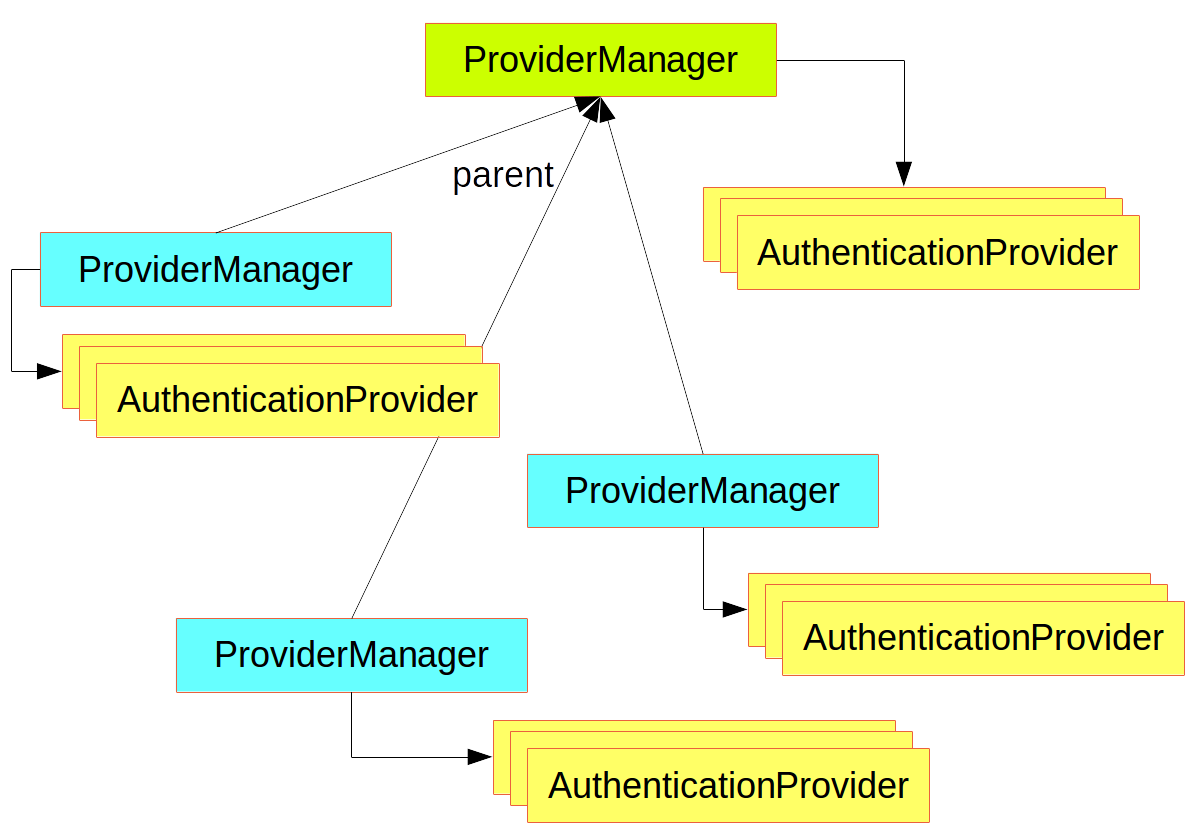
The most commonly used implementation of AuthenticationManager is ProviderManager, which delegates to a chain of AuthenticationProvider instances. An AuthenticationProvider is a bit like an AuthenticationManager, but it has an extra method to allow the caller to query whether it supports a given Authentication type:
public interface AuthenticationProvider {

	Authentication authenticate(Authentication authentication)
			throws AuthenticationException;

	boolean supports(Class<?> authentication);
}
Authorization or Access Control
Once authentication is successful, we can move on to authorization, and the core strategy here is AccessDecisionManager. There are three implementations provided by the framework and all three delegate to a chain of AccessDecisionVoter instances, a bit like the ProviderManager delegates to AuthenticationProviders.
boolean supports(ConfigAttribute attribute);

boolean supports(Class<?> clazz);

int vote(Authentication authentication, S object,
        Collection<ConfigAttribute> attributes);
Web Security
![!](https://raw.githubusercontent.com/spring-guides/top-spring-security-architect